
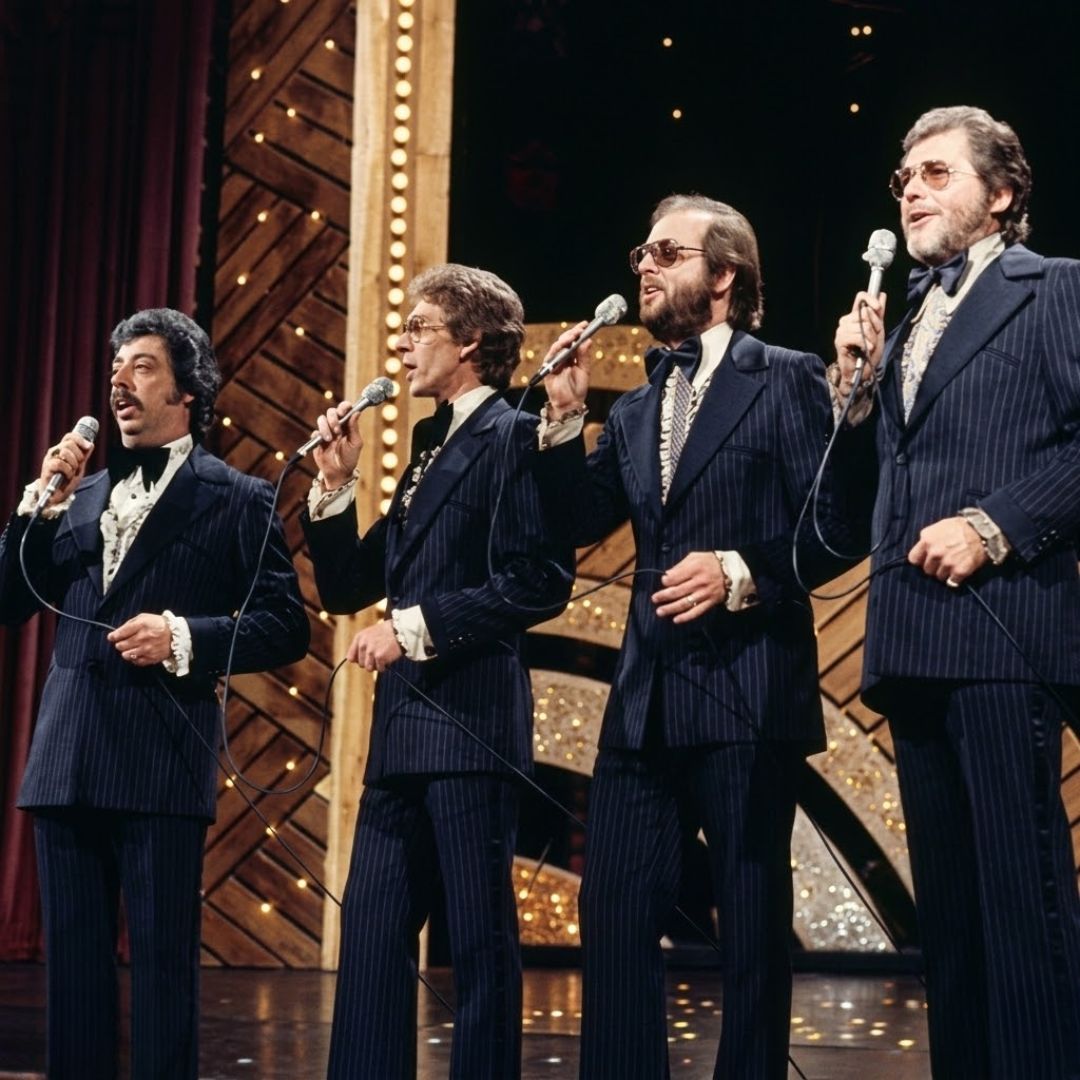
The stage lights were warm, the kind that made everything feel a little closer to home. Not dazzling. Not dramatic. Just steady, golden, and familiar—like the glow from a porch light that says, you're safe here. Don Reid leaned toward the microphone with that calm, clear focus he always carried. Harold Reid stood beside him like an old oak—solid, unhurried, smiling like he already knew what was coming. Phil Balsley and Lew DeWitt waited for the harmony to land, not with nerves, but with the quiet confidence of men who had done this a thousand times and still respected it like the first.
When the first note of "Flowers on the Wall" rose into the room, something quiet happened. The crowd didn't scream. It didn't surge forward. It smiled. Not the polite kind of smile you give a performer. The real kind—the one you don't even notice you're doing until your cheeks start to ache. Four voices folded together so naturally it felt less like a performance and more like a memory everyone suddenly shared. You could almost hear people thinking, Oh… I remember where I was the first time I heard this.
There was no flashing wall of lights behind them. No countdown on a screen. No smoke, no confetti, no attempt to make the moment bigger than it needed to be. The Statler Brothers didn't need help. They had that rare thing country music can't fake: a harmony that sounds like it's telling the truth, even when the lyrics are smiling.
A DIFFERENT KIND OF SILENCE
The longer they sang, the quieter the room became—not because people were bored, but because they didn't want to break the spell. Phones stayed down. Conversations stopped. Even the little sounds you always hear in a venue—the shifting in seats, the clink of ice—felt like they had been asked to wait outside. The Statler Brothers weren't demanding attention. They were earning it the old-fashioned way, by standing still and letting the song do its work.
Don Reid glanced down the line, like a leader checking the heartbeat of his group. Harold Reid answered with a look that said, We're right here. Phil Balsley's part slid in with that smooth certainty, and Lew DeWitt's voice—steady, warm, and plainspoken—made the blend feel lived-in. It was harmony the way it used to be: not perfect because it was polished, but perfect because it belonged together.
After the applause, there was that brief moment where the room was deciding what to do next. Some crowds shout. Some whistle. This one seemed to breathe. Like it had just been reminded of something it didn't want to lose.
WHEN "BED OF ROSE'S" FOUND THE ROOM
Later that night, when they moved into "Bed of Rose's", the room fell even softer. That song has a way of stepping carefully into your chest. It doesn't kick the door open. It sits down beside you. It's heartbreak without tantrums. Faith without showmanship. A little humor tucked into the corners, like a friend trying to keep you from sinking too deep.
And that was always the magic of The Statler Brothers—humor, heartbreak, and faith sitting side by side in the same song. They could make you laugh and ache in the same breath, and neither feeling felt like a trick. It felt like real life. Like families do at kitchen tables. Like people do at funerals when someone cracks a gentle joke just to keep the room from collapsing.
As the harmonies rose, you could feel the crowd leaning in. Not physically, but emotionally. A few people closed their eyes. A few stared at the stage like they were trying to remember every detail for later. Somewhere near the front, a woman whispered the lyrics under her breath like she was praying them back to herself.
FOUR MEN, ONE SOUND, NO RUSH
Here's what made the night stick: The Statler Brothers never acted like they were fighting time. They didn't rush through the choruses. They didn't throw extra drama on the ending. They just stood there and let the harmony do what it always did best—connect people who didn't arrive together, but left feeling like they shared something.
Country music has always had big personalities, and it should. But every now and then, it needs a reminder that a simple song, sung well, can still quiet a room faster than any headline ever could. That night, it wasn't about spectacle. It was about steadiness. Four men in a line, voices stacked like old boards in a church pew, holding up a roof nobody wanted to see fall in.
By the time the set reached its final stretch, it felt like the crowd wasn't just listening anymore. It was remembering. Remembering car radios, and living rooms, and long roads at night. Remembering the kind of music that doesn't beg to be loved—because it already is.
WHICH SONG TAKES YOU BACK FIRST?
Maybe that's why their music still feels alive decades later. The Statler Brothers didn't chase trends. The Statler Brothers didn't try to outrun time. The Statler Brothers just stood there—steady, human, and present—and let the harmony do its work.
And when you hear The Statler Brothers today, which song takes you back first—"Flowers on the Wall" or "Bed of Rose's"?